
Midlife Weight Gain: Why “Eat Less and Exercise More” Isn’t the Whole Answer
You’re eating pretty well.
You’re working out.
Maybe you’ve even started eating less, adding more cardio, or being stricter than you were five years ago.
And yet your body seems to be changing anyway.
For women, weight may suddenly seem more interested in your midsection. For men, the change might look like more belly fat, less muscle, or workouts that don’t seem to produce the same results they used to.
So what gives?
Midlife isn’t necessarily the time to try harder.
It may be the time to get more specific.
Because weight changes in your 40s, 50s, and beyond can involve much more than calories and exercise. Hormones, muscle mass, sleep, stress, nutrition, metabolic health, medications, and aging can all be part of the picture.
And when lifestyle changes alone aren’t enough, treatments such as hormone therapy or medical weight management may be worth discussing with a qualified healthcare provider. The right answer depends on the person.
Why Does Weight Change in Midlife?
Midlife weight gain is rarely explained by one thing.
As we age, body composition changes. We tend to lose muscle, which can affect how much energy our bodies use. Sleep may change. Activity levels can change. Stress can increase. And hormonal changes can affect body composition and where fat is stored.
For women, menopause appears to play an especially important role in the shift toward abdominal fat. The Menopause Society notes that aging is a major driver of midlife weight gain, while menopause contributes to redistribution of fat toward the abdomen.
That distinction matters.
The number on the scale might not tell the entire story.
Why Am I Gaining Belly Fat During Perimenopause or Menopause?
This is one of the questions we hear from women all the time.
“I haven’t really changed what I’m doing. Why has my body changed?”
During the menopause transition, declining estrogen is associated with changes in fat distribution, with women tending to accumulate more fat around the waist rather than the hips. At the same time, age-related loss of muscle, sleep disruption and other lifestyle and metabolic factors may contribute to changes in weight and body composition.
That means the answer isn’t automatically:
Eat less.
Exercise more.
Add more cardio.
Try harder.
A better first question may be:
What changed?
Can Hormone Changes Cause Belly Fat?
Hormones can be part of the picture, but they are not the only explanation.
For women, changes associated with menopause can influence fat distribution and body composition. Research also shows that abdominal obesity is common during menopause and is associated with metabolic health concerns.
But a changing waistline alone doesn’t tell us whether someone needs hormone therapy.
That requires looking at the bigger picture, including symptoms, health history, sleep, nutrition, activity, medications, metabolic health, and other factors.
At The Pip Rx, that is the conversation we are much more interested in having.
Not:
“How little can you eat?”
But:
“Why is your body responding differently now?”
Can HRT Help With Midlife Weight Gain?
Hormone replacement therapy, or HRT, is not a weight-loss medication.
That is important.
Hormone therapy is primarily used to treat appropriate menopause symptoms, including hot flashes and other bothersome symptoms. The Menopause Society notes that hormone therapy itself is not associated with weight gain, and evidence suggests it may have modest favorable effects on abdominal fat and muscle in some women. Those effects are not large enough to make HRT a weight-loss treatment.
So we don’t start with:
“You gained weight. You need hormones.”
Instead, we ask whether weight changes are happening alongside other potential signs of perimenopause or menopause.
Maybe your periods have changed.
Maybe you’re waking up at 3 a.m.
Maybe you’re having hot flashes or night sweats.
Maybe your mood, libido, energy, or concentration feel different.
Maybe you simply keep saying:
“I don’t feel like myself.”
Those details matter.
If hormone therapy is appropriate for you, it may become one piece of a larger health plan.
What About Midlife Weight Gain in Men?
Yes, men. We’re talking to you too.
Midlife body changes aren’t exclusively a women’s hormone conversation.
Testosterone levels tend to decline with age, but simply getting older or developing a belly does not mean a man has testosterone deficiency.
True hypogonadism is diagnosed when a man has symptoms consistent with testosterone deficiency along with repeatedly and accurately measured low testosterone levels. Symptoms can include reduced energy, decreased libido and reduced muscle mass, among others. Obesity and other health conditions can also contribute to low testosterone.
In other words:
Belly fat does not automatically equal low testosterone.
But if your body composition, muscle mass, energy, sexual health, or other symptoms have changed, it may be worth having the conversation.
And testosterone therapy should not be treated as a shortcut for weight loss. The Endocrine Society emphasizes accurate diagnosis and notes that weight loss is typically first-line therapy when obesity is the apparent cause of low testosterone and no other cause is identified.
When Do GLP-1 Medications Fit Into the Conversation?
Sometimes lifestyle changes aren’t enough.
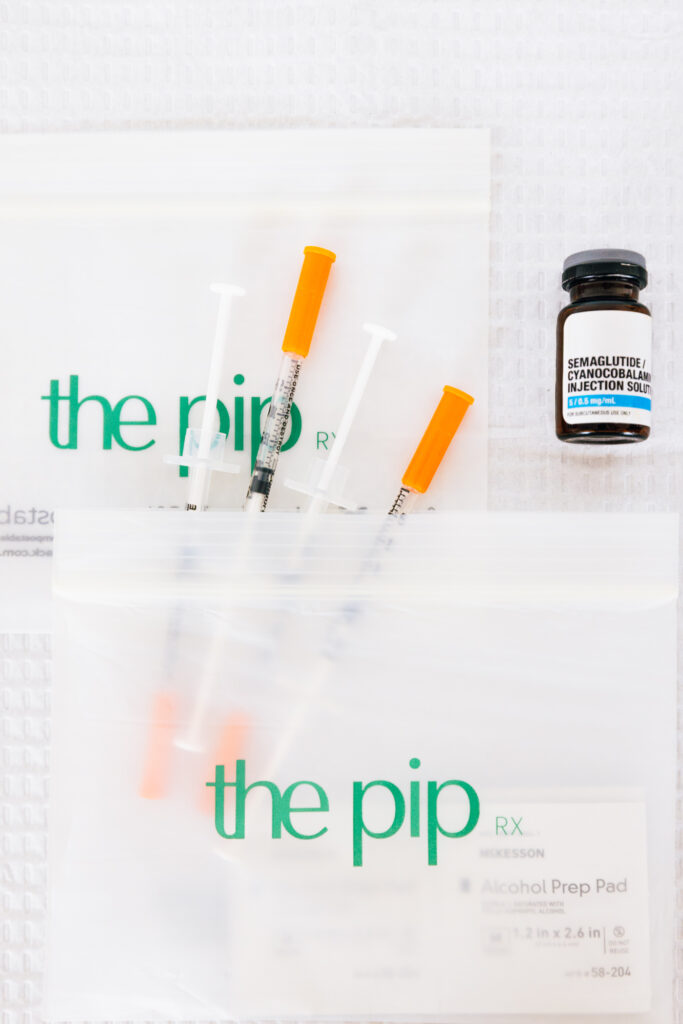
For appropriately selected patients, prescription medications used for chronic weight management can be another tool.
GLP-1-based medications have changed the medical weight-management conversation considerably, but they still shouldn’t replace individualized medical care.
We don’t want to know only:
“How much weight did you lose?”
We also care about questions like:
Are you eating enough?
Are you getting enough protein?
Are you maintaining muscle?
How is your energy?
How are you tolerating your medication?
How is your overall health changing?
Because the goal isn’t simply less of you.
It’s a healthier you.
Medication choice, eligibility, dosing and monitoring should be individualized. FDA also continues to caution consumers about unapproved and improperly marketed compounded GLP-1 products, emphasizing the importance of prescriptions, qualified medical oversight and appropriate pharmacy sourcing.
What About Peptides for Midlife Health and Weight Management?
“Peptides” has become a catch-all wellness term online, but peptides are not one single treatment.
Different peptide-based therapies have different purposes, evidence, regulatory status and safety considerations. Some well-established prescription medications are peptides, including several GLP-1 medications. Other compounds promoted online as “peptide therapy” have far less human safety and effectiveness data.
FDA has specifically identified safety concerns or limited safety information for a number of compounded peptide substances marketed for various purposes.
So this isn’t an area where we recommend choosing something because it is trending.
The better question is:
What are we trying to treat, and what treatment has appropriate evidence for that goal?
That conversation should happen with a qualified healthcare provider who knows your health history.
Hormones or GLP-1? Both? Neither?
This might be our favorite answer:
It depends.
Because personalized medical care shouldn’t begin with choosing a medication.
It should begin with understanding the person.
For one woman, addressing disruptive perimenopause symptoms may be an important part of improving her overall health and ability to maintain healthy habits.
Another person may be an appropriate candidate for medical weight management.
A man experiencing changes in energy, muscle mass and sexual health may need an evaluation that includes testosterone, but symptoms and appropriate testing matter before testosterone treatment is considered.
And someone else may not need medication at all.
Sometimes the appropriate plan includes one treatment.
Sometimes several areas need attention.
Sometimes the answer is neither hormones nor weight-loss medication.
That’s why we start with the person, not the prescription.
What Should a Midlife Weight-Loss Plan Actually Look At?
A comprehensive conversation may include your current symptoms, health history, medications, nutrition, protein intake, strength training and activity, sleep, stress, muscle and body composition, metabolic health, and hormone-related symptoms.
Then we can talk about what support actually makes sense.
That might include nutrition and lifestyle changes, strength training, treatment of menopause symptoms, hormone therapy when appropriate, medical weight management, or other evidence-based options based on your individual health.
The point isn’t to throw every treatment at the problem.
It’s to figure out which pieces actually matter for you.
Midlife Isn’t the Time to Try Harder
If what worked at 30 isn’t working the same way at 45, that doesn’t automatically mean you aren’t disciplined enough.
Your body isn’t exactly the same body it was 15 years ago.
So your health plan shouldn’t have to be the same either.
Before you cut another 500 calories, add another workout, or assume you simply need more willpower, it may be worth asking a better question:
What changed?
At The Pip Rx in Overland Park, Kansas, we provide personalized hormone care and medical weight management for women and men. Our goal is to understand your symptoms, health history, goals, and the bigger picture before deciding what treatment, if any, makes sense for you.
Because midlife isn’t the time to try harder.
It’s the time to get more specific.
Frequently Asked Questions
Why am I gaining belly fat in my 40s even though I exercise?
Midlife changes in muscle mass, sleep, activity, metabolic health and hormones can all affect weight and body composition. In women, menopause is particularly associated with a shift toward more abdominal fat storage.
Does perimenopause cause belly fat?
The menopause transition can influence body composition and where fat is stored. Declining estrogen is associated with increased abdominal fat, although aging and lifestyle factors also contribute.
Will HRT help me lose weight?
HRT is not a weight-loss treatment. It is used to treat appropriate menopause symptoms. Some evidence suggests hormone therapy may have modest favorable effects on body composition, but it should not be prescribed specifically as a weight-loss medication.
Can low testosterone cause weight gain in men?
Testosterone deficiency can be associated with reduced muscle mass and other symptoms, but weight gain alone does not diagnose low testosterone. Clinical guidelines recommend diagnosing hypogonadism only when appropriate symptoms occur alongside consistently low testosterone measurements.
Are GLP-1 medications an option for midlife weight gain?
Prescription weight-management medications can be appropriate for some patients based on their health, weight-related risks and individual circumstances. They should be prescribed and monitored by a qualified healthcare professional.
Should I choose hormone therapy or a GLP-1 for midlife weight gain?
There isn’t a universal answer. HRT and GLP-1 medications are different treatments with different indications. An evaluation can help determine whether hormone symptoms, metabolic health, medical weight management, lifestyle factors or a combination deserve attention.
Where can I get help with midlife weight gain and hormone changes in Overland Park?
The Pip Rx in Overland Park provides personalized hormone care for women and men along with medical weight management and other wellness services. A consultation can help identify what has changed and which treatment options may be appropriate.
Request Appt (Popup)
"*" indicates required fields

Written by The Pip Rx
Medically reviewed by Christina, FNP
Christina, FNP is a Family Nurse Practitioner at The Pip Rx in Overland Park, Kansas, specializing in personalized hormone therapy for women and men. With 15 years of experience in the medical field, her areas of focus include hormone replacement therapy, perimenopause and menopause care, testosterone health, medical weight management, and healthy aging.